From California to Kenya: Real-World Rainwater Harvesting
Greg Chick, a rainwater harvesting expert and contributing author of the ARCSA Manual, has supported off-grid water projects in Kenya. Global Waterworks funded and applied the work using the ARCSA Standard.
KenyaPractical water, built locally
28systems
Under 1 weekeach
Off-gridresident-built
Built to be passed on
Good training keeps moving.
Twenty-eight rainwater harvesting systems were built in off-grid villages, and each one took less than a week to complete. The systems are passive—no complicated machinery and no power grid required. After remote ARCSA training by cell phone and internet, residents did the building themselves.
These villages often have little or no formal government presence. A pastor may also be the schoolteacher, care for an orphanage, and organize the community. Local leaders carry what they learn to nearby villages, using the ARCSA Manual to help their neighbors tackle the same basic need: safe, dependable water.
Kibiwot RWHS tanksKibiwot RWHS first flush / leaf eater setup90 Days.9 Systems.Thousands of lives changed.
The Challenge
Water came at a heavy cost.
Women and children walked long distances each day to collect water from polluted ponds, streams, and rivers. That water often brought illness home. The hours lost to the trip kept children out of school, cut into productive work, and helped poverty repeat itself from one generation to the next.
Reaching water in lower valleys could be dangerous, too. Then the full containers—often more than 45 pounds—had to be carried back uphill, causing lasting stress on bones and joints.
The daily water walk took time, health, and opportunity.
Delivering the tanks: the visible start of a locally run water system.
The Approach
Simple parts. Careful water handling.
The systems follow ARCSA standards and use bio-remediation—a biofilm-based sanitation process developed by ARCSA past presidents Bob Boulware and Heather Kinkade, founders of the BioFilm sanitation method—rather than routine chlorine treatment. Water enters each tank gently so sediment settles, while a floating suction intake draws cleaner water from near the surface.
It is a passive approach designed for places without a dependable power grid: fewer moving parts, straightforward upkeep, and water quality protected by the way the system is built. Parallel projects in Cambodia use the same proven method, showing how the approach can scale beyond Kenya.
The Hope
Local leaders carry the work forward.
Bishop Jacob Khabema and Pastor Festus Langat believed there was a better way. They connected their communities with Global Waterworks, helped organize the work, and became part of a chain of local leaders sharing practical water knowledge from one village to the next.
The hills receive useful rainfall. The job is to catch it, store it safely, and leave each community with the training to keep its own system working.
Community leadership turns a water installation into lasting local knowledge.
Built to Last
Maintenance belongs to the village.
Locally made stainless steel debris excluders use self-cleaning screens to keep leaves and larger material out before water reaches the tanks. Trained villagers inspect and maintain the systems each week. That regular, local care is what keeps a good installation working long after the build team leaves.
Time once spent fetching unsafe water can go back to school, family, and community life.
This work reflects the same principle taught throughout this site — practical water solutions that work anywhere, whether it’s a home in California or a village in Kenya.
In the Community
The work keeps making ripples.
Stories from the people carrying practical rainwater knowledge into conference rooms, villages, and the wider water community.
ARCSA International · 2026
An experience that changes the room
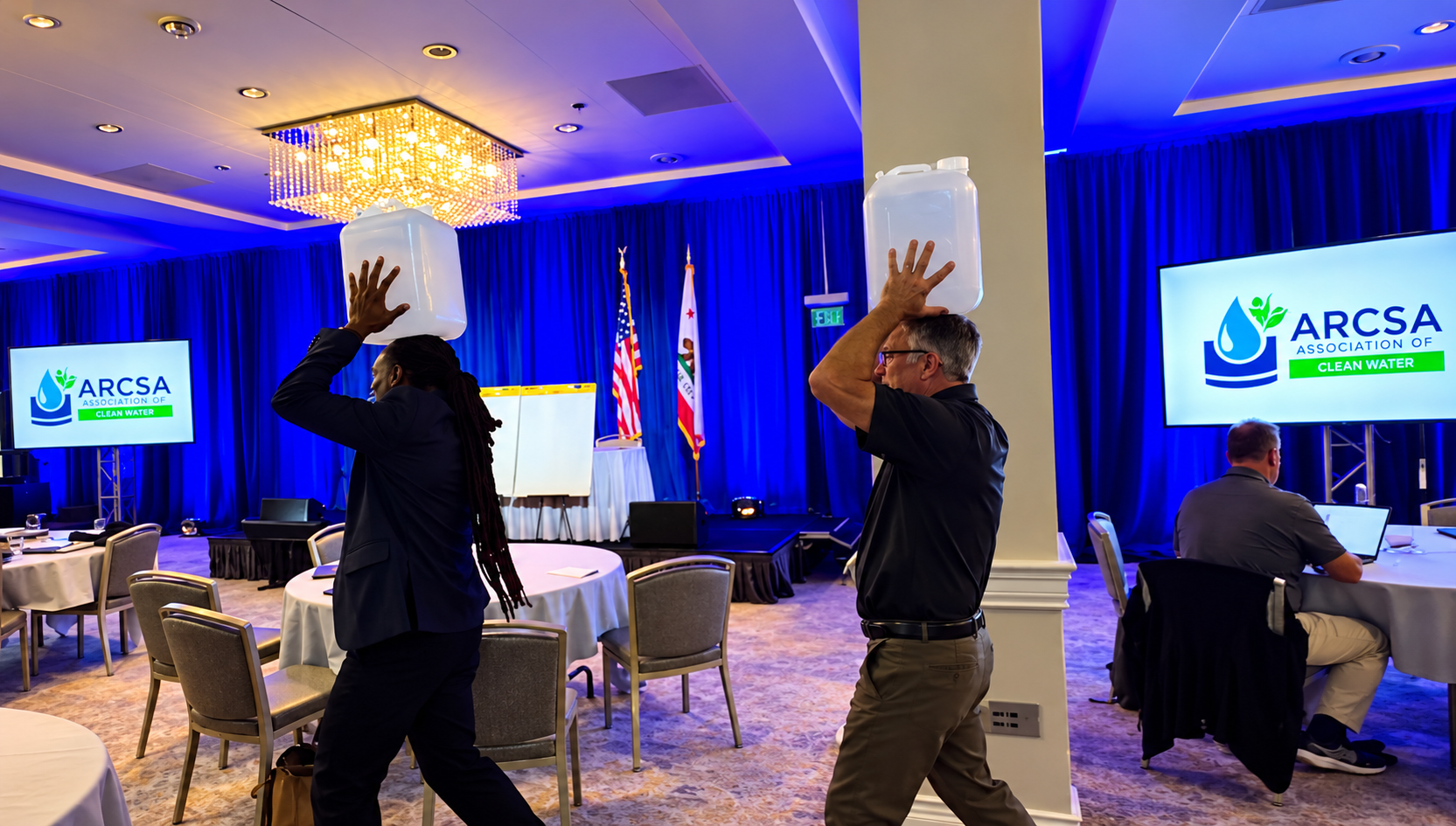
At ARCSA International’s 2026 Conference, rainwater experts Alexander Williams and Edward Van Giesen picked up the weight—about 40 pounds in a five-gallon jerrican—and carried it so the rest of the room could feel, even briefly, what it means to live without it.
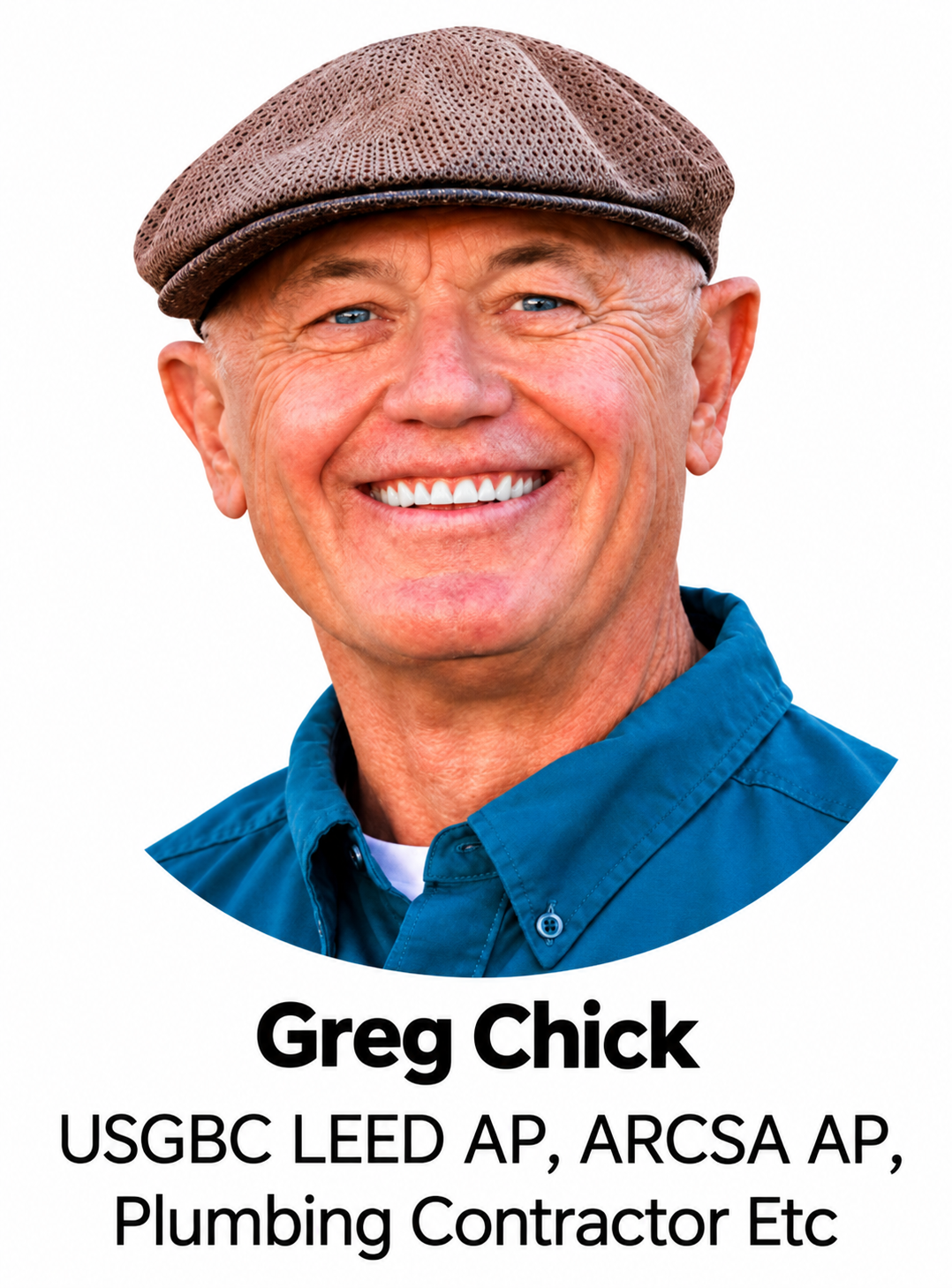
If you have a question about water, Greg Chick probably has an answer. Greg leads the design and training for Global Water Works’ African rainwater projects, and brings more than 50 years of hands-on plumbing and water education experience to the job.
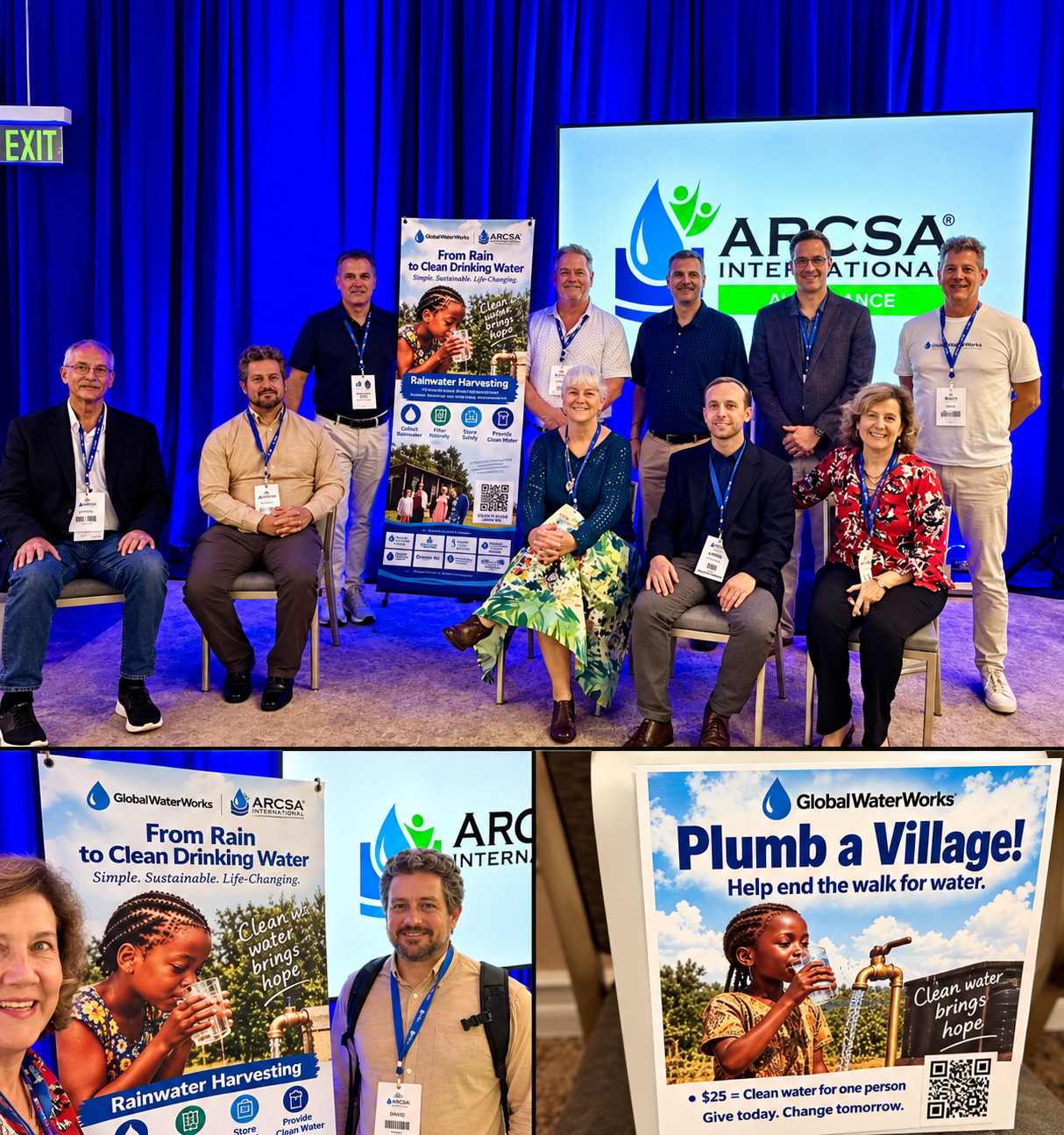
Proud to stand with colleagues at the ARCSA International Conference in support of the Plumb-a-Village campaign—honoring IAPMO’s 100th Anniversary with support for the ARCSA off-grid rainwater harvesting model.